Posts

Showing posts with the label LED

Home Lighting – Basic Lights
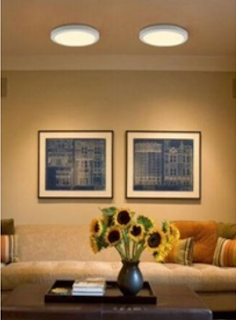
Image
We have our dining room, living room, work office, kitchen, bedroom, etc. and we know that different rooms serve different purposes. Hence each room, having a purpose or multiple purposes requires a suited lighting solution.  Lighting features need to perfectly correspond to the purpose, setting, and application of the room.  Lighting at home is designed to illuminate various interior spaces as per the functional and aesthetic requirements. Lighting the interior spaces include planning the layout of lights, selection of different light fixtures and the type of lights. For home interior design, the lighting system is designed as a layered system. Interior spaces are illuminated using combination of different type of lights & each light has its own distinctive feature. The home lighting is a science as well as art. The science is based on fundamental load design, whereas, the element of art provides ...

Life of LED Light

Image
LEDs are sustainable, eco-friendly, efficient, and safe lighting solutions that deliver multiple benefits to the users.   One of the benefits of LED is its long lifetime. Because they have no movable parts  or filaments tht may break, LED’s can have long lifetime. LEDs generally do not fail by burning out but will slowly reduce in light output over time; as solid state devices they will continue to operate even after 100,000 hours, continuing to use electrical power even if they produce very little useful light. LEDs, however, follow a different method for measuring life expectancy called lumen maintenance. What is lumen maintenance? Lumen maintenance is an approach of measuring the light output (lumens) of a brand new light source and comparing that with its light output after a certain period of time. L70 and L50 are examples of lumen maintenance – benchmarks for when 70% or 50% of a lamp or fixture's total light output remains. What is L70? It is rated lumen-maint...

COLOR COMBINTIONS OF LED LIGHTS

Image
In LED lights ‘Color’ refers to the color of light that the diode emits – this can be any color.   Colored LEDs are all around us, in decorative applications, also being used for communication and indication purposes.  LEDs can generate up to 16 million colors. The material used in the semiconducting element of LED determines its color. A color-changing LED contains three separate diodes within the same bulb casing. Each of these diodes emits its own, specific color – red, green, or blue. When all three diodes are switched on at full capacity, white light is produced. Adjusting the intensity of each diode allows a range of different colors and shades to be created. RGB Concept The RBG concept is an additive model, these colors are used because our eyes see all colors as different combinations of red, green, and blue wavelengths. Red and amber LEDs use the aluminum indium gallium phosphide (AlInGaP) material system. Green diodes, whereas, use gallium phosphide and blue...

DOB LED Lights

Image
A DOB "driver-on-board" LED light is an LED lighting system (either an LED bulb or an LED luminaire) that incorporates a light engine (driver-integrated LED assembly intended to operate directly on line voltage power) with an integrated on-board driver.  In conventional LED lighting systems the driver is typically separated from the LED assembly and fabricated on an FR4 printed circuit board (PCB). This configuration is based on the consideration that LED drivers have been dominantly designed as switching mode power supplies. SMPS drivers typically make use of bulky, expensive and unreliable reactive components such as inductors and capacitors. The use of reactive components necessitates a dedicated FR4 board which provide adequate routing layers for component interconnects. In an integrated lighting system, the considerable volume of a typical SMPS driver creates a need for an adequate space within the lighting system in order to accomm...

LED Lifetime Lumen Degradation

Image
All light sources degrade over time or most just “burn out”. LEDs, on the other hand, do not burn out but continue to degrade – eventually beyond useful light output, which is typically recognized as 70% of initial luminous flux (L70). Recognizing the need for an industry standard that would also help users evaluate LED products, in 2008 the Illuminating Engineering Society of North America (IES) published LM-80. Note, however that while LM-80 provides a standard method for testing lumen maintenance, it does not provide guidance or recommendations for predicting or extrapolating maintenance beyond the duration of these measurements. LM-80 is a standard that defines how the lumen output and colour shift of LEDs should be measured over time and at different temperatures. The full name of the latest version of this standard is “IES LM-80-20 Approved Method: Measuring Luminous Flux and Color Maintenance of LED Packages, Arrays and Modules”. LM80 Test LM-80 is important to lighting de...