Posts

Showing posts with the label LED Lights

Home Lighting – Basic Lights
Image
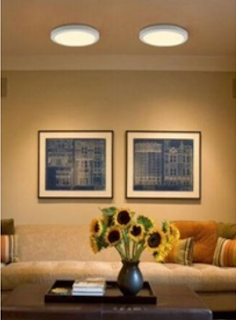
We have our dining room, living room, work office, kitchen, bedroom, etc. and we know that different rooms serve different purposes. Hence each room, having a purpose or multiple purposes requires a suited lighting solution.  Lighting features need to perfectly correspond to the purpose, setting, and application of the room.  Lighting at home is designed to illuminate various interior spaces as per the functional and aesthetic requirements. Lighting the interior spaces include planning the layout of lights, selection of different light fixtures and the type of lights. For home interior design, the lighting system is designed as a layered system. Interior spaces are illuminated using combination of different type of lights & each light has its own distinctive feature. The home lighting is a science as well as art. The science is based on fundamental load design, whereas, the element of art provides ...

COB LED

Image
The latest LED improvement has been “Chip On Board” or COB innovation.  A COB (Chip-on-Board) is an LED packaging technology that describes mounting multiple LED chips directly onto a substrate to form a single module.    Multiple LEDs, minuscule in size, are wired and packaged together into a single ceramic or copper board so that they function as a sole light source. ​ They are sometimes nicknamed “fried eggs” (when they are not lit) because of their yellow phosphor circle on a white board. COBs are made up of multiple chips, usually with a minimum of 9 on a board.  Due to the small size of the LED chips (imagine a quarter), Chip-on-Board technology allows for a much higher packing density than surface mount technology (SMD). COB chips only have 1 circuit and 2 contacts, regardless of the number of the diodes. When a COB LED package is energized, it appears more like a lighting panel than multiple individual lights as usually the case with other LED packages, li...

LED Lights & Enviornment

Image
It is becoming increasingly important for companies to become eco-friendly. Customers increasingly want environmentally friendly options and using an environmentally friendly light source can help companies reduce their energy use, as well as attract a socially conscious consumer base. The energy sector contributes up to 40% of the global carbon footprint. This means that we need efficiency in the energy sector. Light Emitting Diodes, LED lights, is one of the most energy-efficient lighting technologies. LED bulbs save more than 80% of energy when compared to incandescent bulbs.  LED lights consume less energy LED lights need significantly less energy to be bright, unlike other traditional luminaries. In some cases, LED Lights can save more than 85% on energy consumption. Fewer watts per bulb saves energy which means less energy is needed. On a traditional bulb, you will get as much as 20 lumens per Watt. In a LED bulb, one Watt can light up as many as 100 lumens....

LED DOWNLIGHTS

Image
LED downlights are recessed systems those are designed and engineered for optimal operation of an LED module and also efficient regulation and precise distribution of its luminous flux. In conjunction with custom designed secondary optics, an array of discrete LEDs can be designed to provide uniform ambient illumination; a single-point LED can create a spot beam with the highest punch possible for accent lighting. The integrated design allows the LEDs to make full use of the luminaire housing for heat sinking, thereby keeping the LED junction temperature under control and maximizing the performance potential of LEDs. In systems with co-located drivers, miniaturized LEDs or compact LED arrays make space for an electrical compartment that can accommodate full-featured driver and control circuitry while isolating thermal stresses from the LED module. An integrated LED downlight generally consists of housing, an LED light module, a driver, and a trim. Housing The housing is the...

LED PANEL LIGHT

Image
LED panel lights offer a contemporary, sleek alternative for ceiling lighting to old-dated fluorescent lighting. An LED panel light is designed to  provide sufficient lighting of varied light intensity, or lux level. Panel lights offer “edge to edge” lighting for smooth, even and bright output. LEDs are oriented directly toward light diffusing layer, inducing the light emitted from LEDs to shine directly onto light diffusing layer. Two of the primary lighting panel structures are direct-lit backlight modules and edge-lit modules The difference between edge-lit and back-lit lies in the position of LEDs and the usage of LGP(light guide plate). Normally, Back-lit Panel Light doesn’t have any LPG due to direct shining method. A direct-lit LED panel comprises a number of LED light sources which are directly disposed under a panel. But LED is a form of directional light source, of which light output intensity is strongest at 90 degrees. LEDs are oriented directly toward light dif...

LED DRIVER - PRINCIPLE & TYPES

Image
A LED driver is an electrical device that regulates power to a LED or a string of LEDs. A LED driver is a self-contained power supply which regulates the power required for the LED or array of LEDs. The power level required changes throughout the LED’s temperature increases and decreases. Without the correct LED light driver the LEDs would become too hot and unstable resulting in failure and bad performance. To ensure the LEDs function perfectly, the self-contained LED driver is required to supply a maintained constant amount of power to the LED. It is a crucial piece to an LED circuit and to operate without one will result in system failure. Characteristics of an LED LEDs are semiconductors where the junctions produce light when powered by a DC voltage. Like all semiconductors, they only conduct electricity in one direction and, consequently, the connecting wires indicate the polarity. Light comes from the LED when electrical current flows through it from the anode (+) to the cathod...